
Australian businesses searching for “rank higher google maps australia” usually need three things: a clean Google Business Profile, proof that customers trust them, and location signals that match their real service area. Google’s local results are built around relevance, distance and prominence, so the work is part profile setup, part local SEO, and part reputation management.

For a plumber in Parramatta, a dentist in Brisbane or an electrician in Adelaide, the map pack can be the shortest path from search to enquiry. People see your name, reviews, hours, photos, service area and call button before they visit your website.
That makes Google Maps work different from ordinary SEO. Your website still counts, which is why a well-built SEO strategy supports the profile. But the profile has its own rules, weak spots and quick wins.
How does the local map pack work?
Google Maps ranking depends on how well your business matches the search, how close you are to the searcher and how well known your business appears online.
Google names the three main local ranking factors as relevance, distance and prominence in its local ranking guidance. In plain English, Google asks:
- Does this business offer the service the person searched for?
- Is it close enough, or does it serve that area?
- Do reviews, links, citations and web mentions suggest people know and trust it?
| Ranking factor | What it means | What to improve |
|---|---|---|
| Relevance | Your profile matches the search. | Categories, services, description and website content. |
| Distance | Your location or service area fits the searcher. | Accurate address, service areas and local pages. |
| Prominence | The business has proof across the web. | Reviews, links, citations, photos and local mentions. |
How should you set up Google Business Profile correctly?
Start with accuracy. A Google Business Profile should match the business that customers know offline and on your website.
Google’s profile guidelines say your business name should reflect the real-world name used on signage, stationery and branding. Don’t add extra suburbs, keywords or service claims to the name. That can trigger edits or suspension.
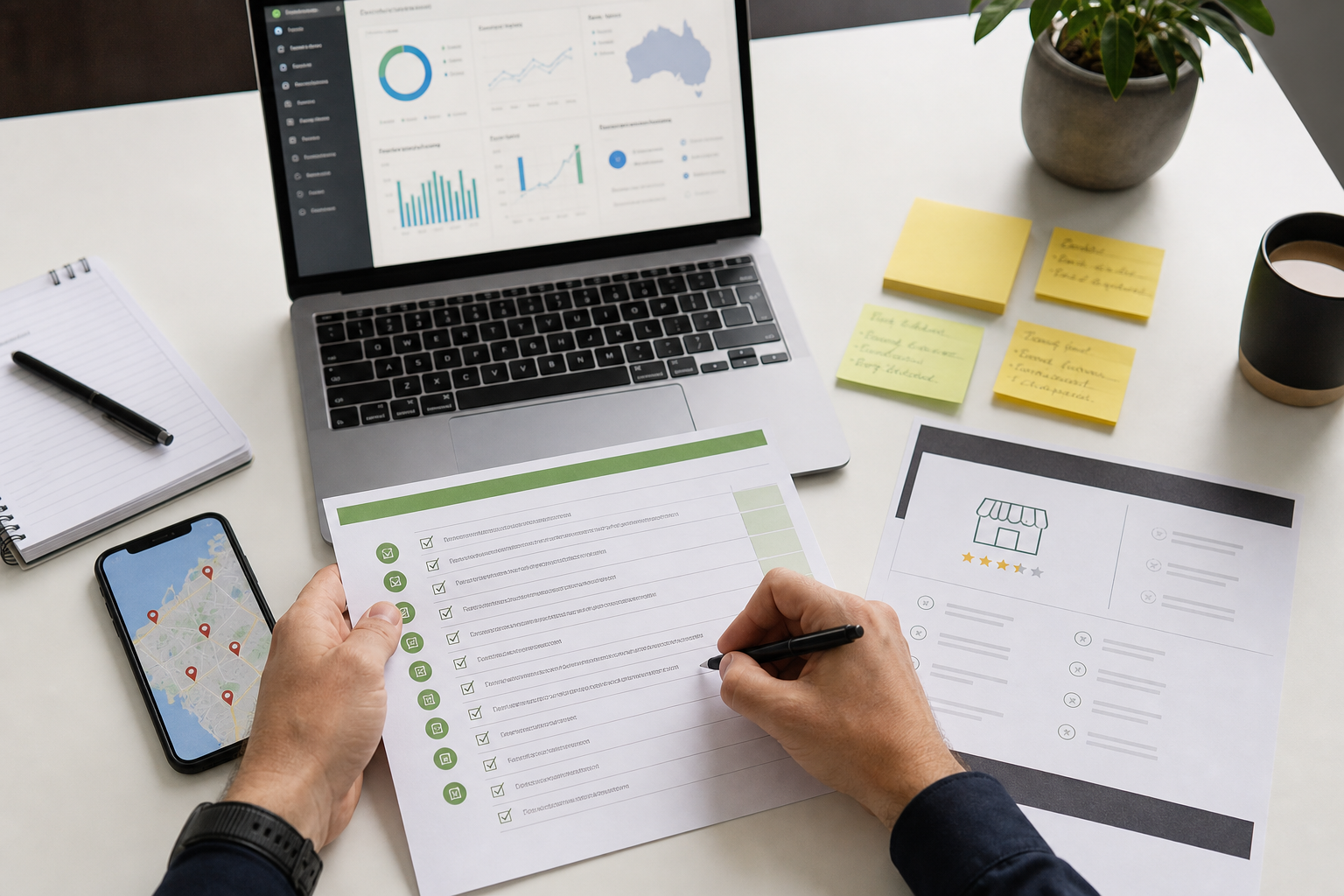
For google business profile optimisation, check these first:
- Business name, address, phone number and website match your site.
- Opening hours include public holidays and seasonal changes.
- Service area reflects where you actually work.
- Appointment links, quote links and phone numbers go to the right place.
- The description explains services without stuffing suburb names.
If you serve customers at their location, read Google’s service-area business rules before showing or hiding an address. A home-based trades business should not list a residential address publicly unless it is staffed and customer-facing.
Which categories and services should you choose?
Choose the most specific category that describes what the business is, then use services to explain what customers can book or request.
Google says categories should describe what the business is, not every service it has. A “Plumber” can list services like hot water repairs, blocked drains and emergency plumbing. A “Marketing agency” can list SEO, Google Ads and content services.
Bad category choices usually come from chasing keywords. Good choices come from buyer intent. If customers search for the service and Google offers a matching category, use the closest real category. Then support it with service pages and local content, like Circular Marketing’s article on local SEO for Australian businesses.
Which reviews help Google Maps ranking?
Reviews help map visibility when they are steady, genuine and specific. The best review programs ask every real customer, not only happy ones.
Google allows businesses to ask customers for reviews, including through a review link or QR code. It also says incentives for posting, changing or removing reviews are prohibited. The ACCC gives similar guidance for Australian businesses: fake or misleading reviews are against the law, and reviews should reflect genuine customer experiences.

A safe review process looks like this:
- Ask shortly after the job, while the work is fresh.
- Send the same request to customers, regardless of mood.
- Don’t offer discounts, gifts or cash for reviews.
- Reply to positive and negative reviews in a calm, specific way.
- Never write reviews for customers or ask staff to pose as customers.
Review replies also help conversion. A short reply that names the service, thanks the customer and handles concerns professionally gives future buyers more confidence.
Do local citations still help Australian businesses?
Local citations help when they confirm the same business details across trusted Australian directories, industry sites and local listings.
A citation is a mention of your business name, address, phone number and website. You’ll often see this called NAP consistency. For service businesses, citations can appear on directories, chamber of commerce pages, supplier lists, franchise pages, association profiles and local sponsorship pages.
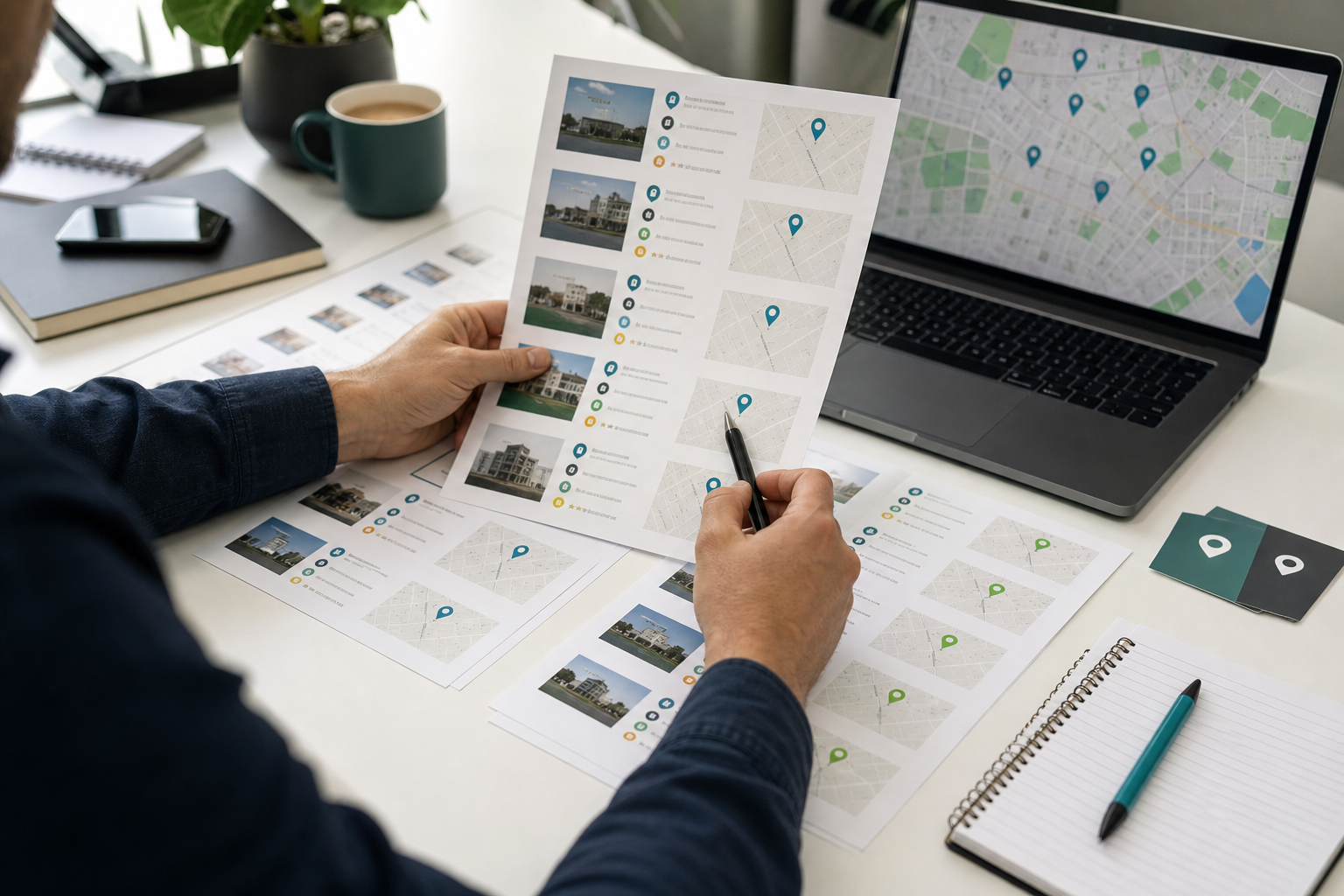
Don’t build hundreds of low-quality listings. Start with places customers may actually trust. Then fix mismatched phone numbers, old addresses, duplicate listings and outdated trading names.
This also connects with entity SEO and brand trust. AI systems and search engines need repeated, consistent facts before they confidently connect a brand to a service area.
Do posts and photos help map visibility?
Posts and photos won’t replace reviews or correct categories, but they keep the profile active and help customers judge the business faster.
Google encourages businesses to add photos and videos to show what they offer. For local service businesses, useful images include team photos, completed work, vehicles, premises, before-and-after shots where allowed and product examples.
GBP Australia content should feel current. Add photos monthly, publish short updates when you launch a service or seasonal offer, and remove old images that no longer reflect the business.
When should you bring in local SEO help?
Bring in help when the basics are done but enquiries are flat, rankings vary by suburb or competitors keep beating you in the map pack.
A local SEO partner can audit the profile, website, citations, reviews and suburb pages together. That matters because Google Maps ranking rarely comes from one task. Circular Marketing’s Google Business Profile optimisation example shows how profile work connects with service pages and location signals.
Reporting matters too. Track calls, direction requests, website clicks, form enquiries, ranking movement and profile actions each month. Circular Marketing’s marketing reporting page explains how to connect visibility with leads, not vanity numbers.
If AI search is part of your plan, connect the article and profile work with answer-ready content. The same clear local facts that support Maps also help AI systems explain your business. See Circular Marketing’s guide to AI Overviews and answer engines for that next layer.
Google Maps Ranking Takeaways
To rank higher on Google Maps in Australia, fix the profile first, then build proof around it. Categories, services, reviews, citations, photos, website pages and reporting all work together.
If your business wants more local leads from Maps and Search, book a strategy conversation with Circular Marketing.